Daily Safety Checks Aboard: 10 Things to Look For Before You Move

Whether you’re heading out for a long run or just repositioning after a night at anchor, a quick daily check can save you a whole lot of trouble later. Think of it like a pre-flight checklist—simple, repeatable, and tailored to your boat. It doesn’t have to be complicated, but it does need to be consistent. It’s a good idea to keep a printed version at the helm, and the kids have even get into the habit of helping.
Here’s a solid starting point for your own daily safety checklist, with tips to help you customize it to your vessel and crew.
⛓ 1. Anchor & Ground Tackle
Before you raise anchor, take a moment to visually inspect your ground tackle.
Is the anchor chain clear and untangled?
Are the snubber or bridle lines removed and stowed?
Does the windlass respond properly when tested?
We’ve had mornings where seaweed wrapped around the anchor like spaghetti—always better to catch that before it jams your windlass.
🌊 2. Bilge Check
Lift the bilge covers and have a quick look.
Is the bilge dry or is there unexpected water?
Are the pumps operational?
This one’s easy to overlook until you start moving and find out the hard way.
🔋 3. Power Systems
Check your battery levels and power usage before you unplug from shore or solar.
Are your house batteries sufficiently charged?
Is your inverter on if needed?
Do you have enough power for the day’s run?
We use a Victron display, but even a glance at voltage levels can give you a good idea of where things stand.
⛽ 4. Fuel & Fluids
Check your fuel gauge, and if you have a diesel, don’t forget:
Engine oil level
Transmission fluid
Coolant level
We keep paper towels and gloves near the engine bay to make this one quick and clean.
💨 5. Weather & Conditions
Even if you looked last night, check again.
Any wind shifts or storms in the updated forecast?
Changes in tide or current?
A last-minute squall can change everything, especially when docking or transiting narrow cuts.
🛥 6. Engine & Drive Systems
Give your engine a look and a listen.
Belts, hoses, and clamps all look good?
Start the engine—does it fire up cleanly and idle smoothly?
Any odd noises or vibrations?
We also peek under the engine for new drips that weren’t there the day before.
🧰 7. Navigation & Electronics
Confirm that your instruments are ready to go.
Chartplotter on and set to the right scale?
AIS, radar, and VHF operational?
Routes or waypoints loaded (if applicable)?
It’s a pain to be fiddling with settings after you’re already moving.
🧺 8. Stow & Secure
Do a sweep inside and out.
Dishes put away, hatches locked, and cabinet latches closed?
Deck items like fenders, lines, dinghy, solar panels secured?
We call this our “move mode” sweep. It keeps things from flying around underway.
🧭 9. Steering & Throttle
Give the helm a quick systems check.
Wheel or tiller moves freely?
Rudder feedback normal?
Throttle and shift controls responding as expected?
Sometimes a line drapes over the rudder or a forgotten fender line gets caught—this check catches that before it becomes a problem.
🧑✈️ 10. Crew Readiness
Make sure everyone’s on the same page.
Life jackets out (or on, depending on your policy)?
Kids briefed on the plan?
Lines and fenders assigned if you’re docking?
We try to start every moving day with a few minutes of communication, even if it’s just a casual “here’s the plan.”
📝 Customize Your List
Every boat is different. A catamaran might need saildrive checks, a trawler might have more complex generator needs, and if you’re solo, you’ll prioritize a little differently than a family of four. Start with this list, then make it your own.
You might even laminated yours and check it off with a dry-erase marker each morning. It’s not about perfection—it’s about habits that help us cruise safely and confidently.
We’d Love to Hear From You!
What’s on your daily checklist? Share in the comments below—I’d love to hear what works for you!
Want more of what you see here?
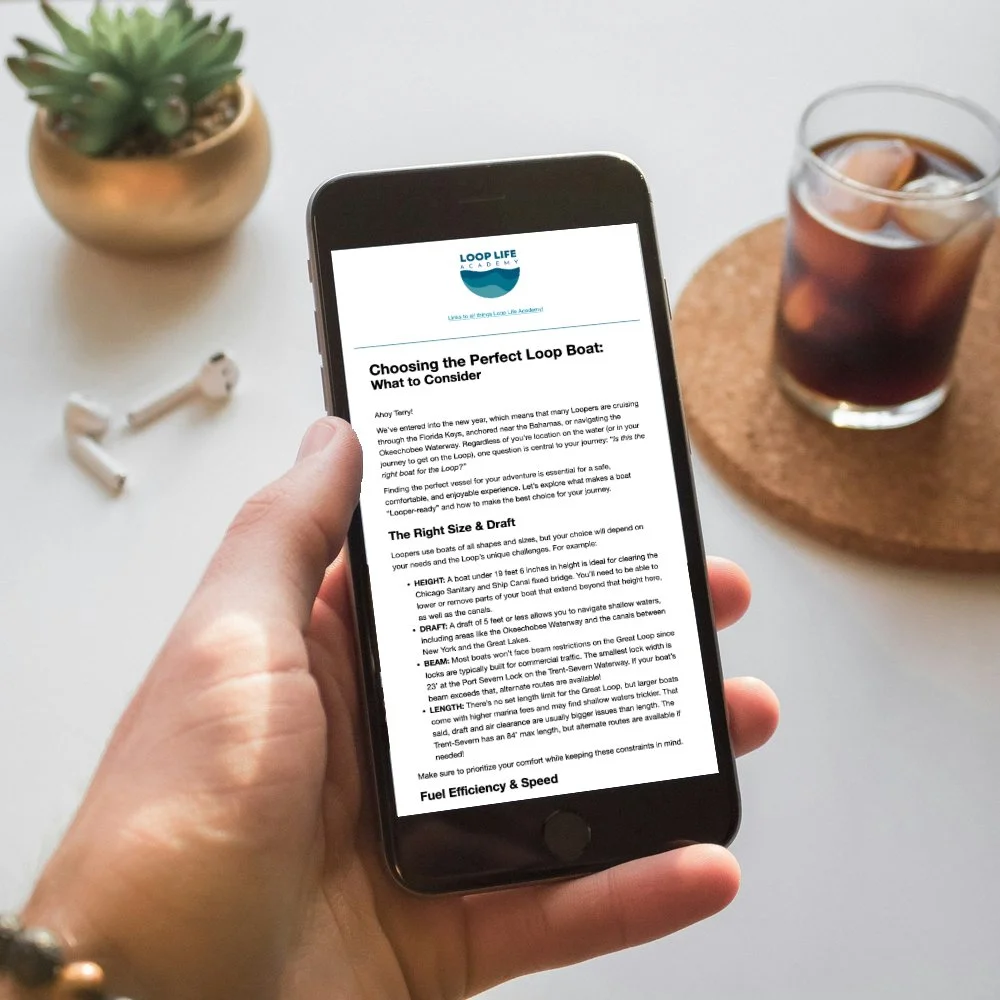
If you’re ready for more Great Loop insights, my weekly emails are just what you need!
Each week, you’ll get fresh tips, updates on new blog posts, videos, podcasts, and a chance to catch up on older content you might have missed.
Don’t miss out on practical advice and inspiration for your Loop journey!