Common Mistakes Loopers Make in Busy Harbors (and How to Avoid Them)

Busy harbors can be some of the most stressful spots on the Loop. Between tour boats, ferries, other cruisers, and local traffic, it’s easy to feel like chaos is closing in. But most “oops” moments are completely preventable with a little planning, patience, and awareness.
Here are the most common mistakes we see, along with what to do instead.
1. Approaching the Dock Too Fast
One of the most frequent issues in crowded harbors is coming in too quickly. Even a small miscalculation can leave you swinging off the pilings or drifting into another boat.
How to avoid it:
Reduce speed well before the dock. You want time to react if current, wind, or another boat nudges you off course.
Have fenders and lines ready before entering the slip.
If possible, assign crew roles in advance: one handles lines, one handles fenders, and the helmsman focuses on approach.
Pro tip: Even if you feel rushed because of traffic, slowing down usually prevents more stress and damage than trying to “beat” the other boats.
2. Forgetting About Tour Boat Traffic
Popular harbors often have tour boats, ferries, or other commercial traffic. These vessels are big, fast, and often operate on schedules that leave little room for improvised maneuvers.
How to avoid it:
Watch AIS and visually scan for approaching commercial boats. They may have restricted maneuverability.
Give them wide berth. Don’t assume they can stop or turn quickly.
Communicate on VHF if necessary: a quick heads-up can prevent surprises.
Always anticipate wakes. Large vessels passing at speed can push smaller boats off course.
3. Right-of-Way Confusion
Even experienced Loopers sometimes get tripped up in busy harbors over who yields. Powerboats, sailboats, and commercial traffic all have different rules, and crowded conditions amplify mistakes.
How to avoid it:
Brush up on the basic “give-way” rules before entering a harbor.
Remember: power vs. sail, overtaking, crossing… in tight quarters, it’s better to yield early than argue your “right.”
Use your horn or VHF to clarify intentions if needed (be aware that many recreational boaters are less familiar with horn signals).
4. Not Planning Your Approach
Many accidents happen because the approach wasn’t planned at all. Without a clear path, you’re reacting to chaos instead of guiding your boat intentionally.
How to avoid it:
Scout your slip or anchorage in advance if possible, even if it’s just looking at a satellite image on your phone.
Look for obstructions, currents, and wind direction.
Identify safe anchorages nearby as a backup if your preferred slip is crowded.
The Bottom Line
Busy harbors can be stressful, but most Loopers avoid damage and frustration by slowing down, watching for commercial traffic, brushing up on right-of-way rules, and planning approaches in advance. With practice, crowded harbors become just another part of the adventure… a chance to flex your docking skills and boat handling confidence.
We’d Love to Hear From You!
👉 What’s your most memorable “harbor chaos” story? Did you learn a lesson the hard way, or have a pro tip to share? Drop it in the comments!
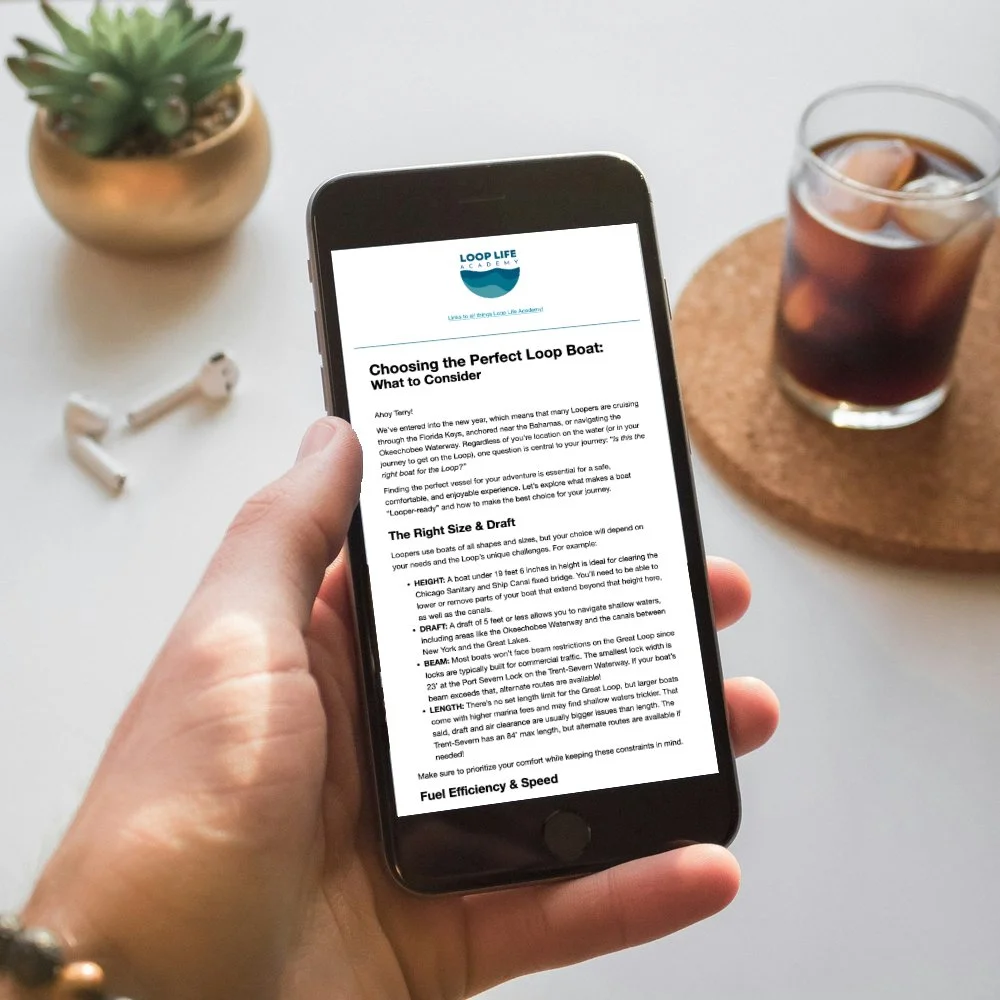
Want more of what you see here?
If you’re ready for more Great Loop insights, my weekly emails are just what you need!
Each week, you’ll get fresh tips, updates on new blog posts, videos, podcasts, and a chance to catch up on older content you might have missed.
Don’t miss out on practical advice and inspiration for your Loop journey!