How to Read a Cruising Guide Without Getting Overwhelmed
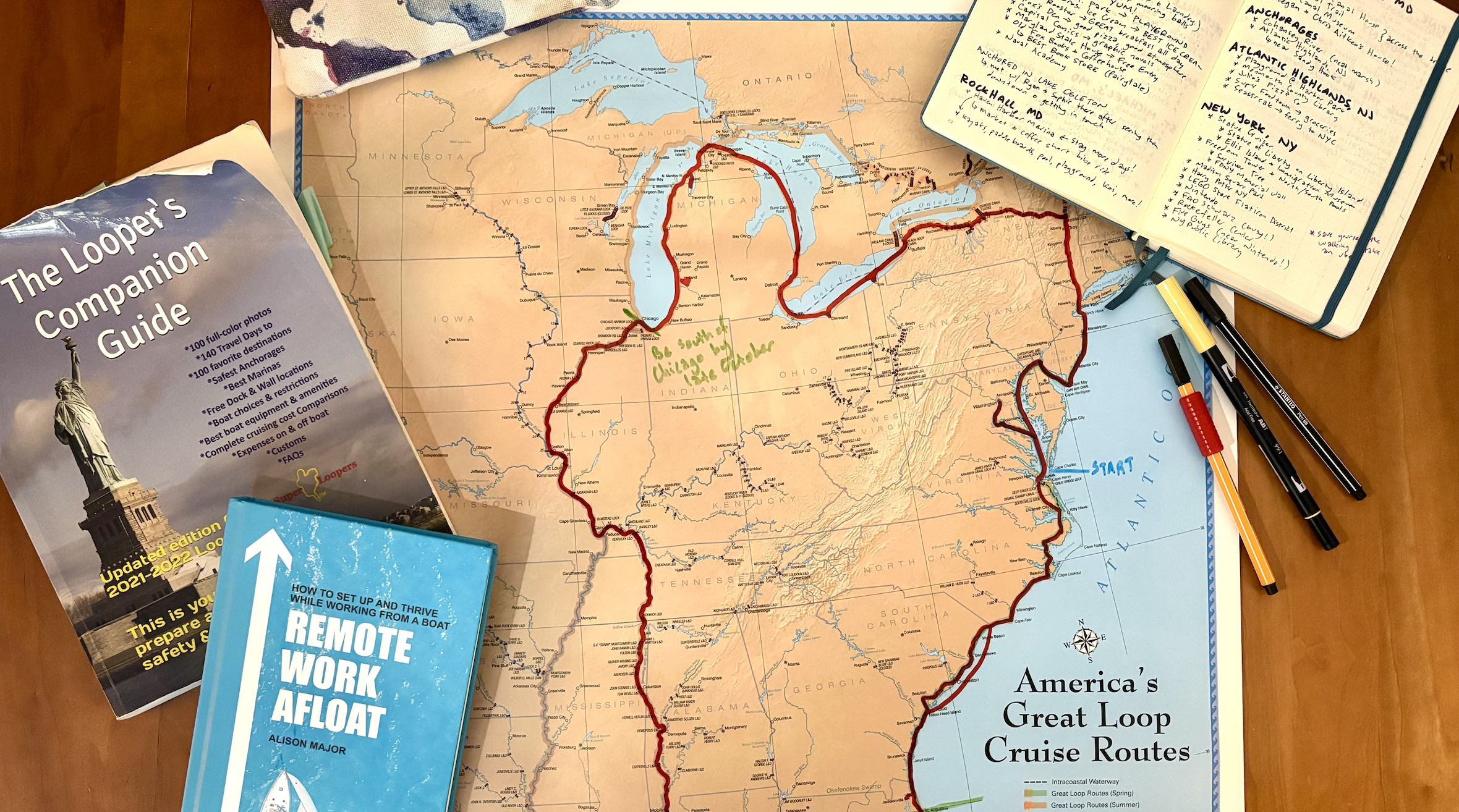
At some point in your Loop planning journey, someone will hand you (or you will enthusiastically order) a cruising guide. Maybe a couple of them. Maybe five.
And then you will sit down to read one, and somewhere around page 47, with its depth soundings and bridge clearances and marina ratings and historical notes and cautionary paragraphs about tricky currents, a small but persistent voice will say:
I don't know how anyone does this.
I know that voice. Here's how to make it stop.
First — understand what a cruising guide actually is.
A cruising guide is not a textbook. It's not meant to be read cover to cover before you leave the dock. It's a reference tool: more like a really experienced friend who's been everywhere you're going and has opinions about all of it.
You wouldn't sit down and have a six-hour conversation with that friend before your trip, trying to memorize everything they said. You'd check in with them before each leg, ask what you actually need to know right now, and move on.
That's how to use a cruising guide. A little at a time. When it's relevant.
The guides worth knowing about.
There are a handful that Loopers reach for most often:
Skipper Bob publications are a staple in the Looper community: straightforward, practical, regularly updated, and specifically focused on the Loop route. If you only get one resource to start, this is a strong choice.
The Waterway Guide covers the Intracoastal Waterway and inland rivers in depth. It's detailed and reliable, and the online version is updated more frequently than print.
Dozier's Waterway Guide is another trusted name, especially for the ICW and Atlantic coverage.
ActiveCaptain isn't a traditional guide. It's a community-driven database of marina reviews, anchorages, hazard reports, and local knowledge. It's often integrated into Garmin chartplotters and Navionics and is genuinely invaluable for real-time, on-the-water input from other cruisers. Think of it as the Yelp of the waterways, except the reviewers actually know what they're talking about.
You don't need all of these. Start with one or two and learn how they're organized before you pile on more.
How to actually read one without losing your mind.
Here's the approach that works:
Read the introduction and overview sections first, once. Most guides open with a general overview of the route, how the guide is organized, symbols used, and important caveats. Read this section fully, one time. It orients you to everything that follows and saves a lot of confusion later.
Then put it down and come back to it by segment. The Loop is long. You don't need to know about the Tennessee-Tombigbee Waterway when you're still planning your first week on the ICW. Open the guide to the section covering where you're headed next… not the whole route.
Focus on three things per segment:
Hazards and tricky spots (shallow areas, strong currents, bridges with restrictive clearances)
Marina and anchorage options, especially with notes on fuel, pump-out, and depth
Anything flagged as time-sensitive (lock hours, seasonal closures, tidal windows)
Everything else — the history, the restaurant recommendations, the local color — is great to skim, but it's a bonus, not a requirement.
Cross-reference with ActiveCaptain for recent intel. Guides are updated annually at best. ActiveCaptain entries can be as new as days or weeks old. If a guide says a marina has great fuel prices and a recent ActiveCaptain review says the fuel dock is closed for repairs, trust the recent review.
What you can safely skip — at least for now.
The historical and cultural sections. Lovely. Not urgent.
The exhaustive lists of every marina in a region when you're only stopping at two or three. Scan for yours, ignore the rest.
The detailed specifications for vessel types very different from yours. If you're on a sailboat, you can skim past the powerboat-specific fuel consumption math. If you're on a trawler with a 5-foot draft, the section about shoal-draft access doesn't apply to you.
The "in a perfect world" sightseeing detours. File those away for later… they're great for "what if we have extra time?" planning, but they shouldn't be on your pre-departure checklist.
A note on information overload in general.
Cruising guides are just one source of Loop information, and they can stack up fast. Guides, forums, Facebook groups, podcasts, YouTube channels, other Loopers… everyone has advice, and a lot of it is contradictory. Almost all of it comes from someone who did the Loop on a different boat, in a different season, with different priorities than yours.
Use guides as a foundation. Use community input as a supplement. And then trust yourself to make decisions with the information you have.
You are not going to find the perfect, complete, absolutely certain answer before you leave the dock. Nobody does. The Loopers who thrive are the ones who learn to gather enough information to make a good decision, and then make it.
One practical tip before you go.
If you have a physical guide, tab it by region before your trip. A pack of sticky tabs and 20 minutes is all it takes. When you're underway and need to find the section on a specific stretch quickly, you'll be glad you did.
And if you're building your planning library and want a place to track decisions, notes, and details that don't fit neatly into any guide, grab a blank notebook or a Great Loop Journal to record them.
The guides tell you what's out there. The journal helps you figure out what it means for your trip.
We’d Love to Hear From You!
What cruising resources have you found most useful in your planning?
Drop them in the comments. I'd love to add to this list.
Want practical planning tips delivered to your inbox? Sign up for our regular email and stay in the loop.
If you’re ready for more Great Loop insights, our regular emails are just what you need!
You’ll get fresh tips, updates on new blog posts, videos, podcasts, and a chance to catch up on older content you might have missed.
Don’t miss out on practical advice and inspiration for your Loop journey!