🇺🇸 Learning About Our Independence
Yesterday was July 4, and in the United States, we celebrate Independence Day each year on this date.
On this day, we celebrate our independence from Britain as the anniversary of the Second Continental Congress's adoption of the Declaration of Independence on July 4, 1776.
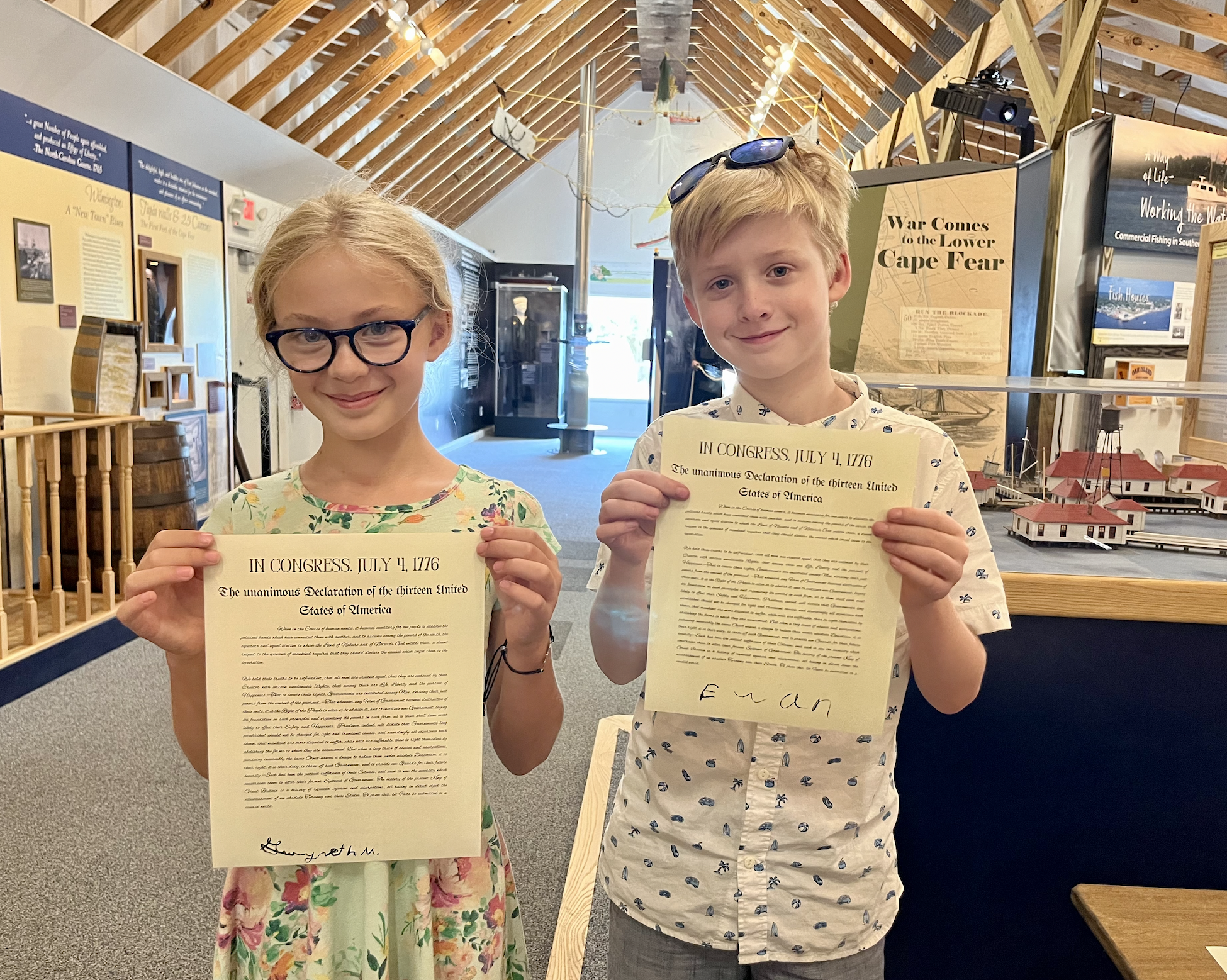
While visiting the North Carolina Maritime Museum in Southport, there was an activity where we learned how to make and use quill pens, then signed their own copy of the Declaration of Independence.
Before we became the 50 United States of America, there were 13 colonies. In the late 1700s, delegates from these thirteen colonies came together to support the American Revolution and the Revolutionary War. This group of men was called the Second Continental Congress. This group formed the Declaration of Independence to break free from the British Empire.
The Second Continental Congress included a 33-year-old man from Virginia named Thomas Jefferson. He was very talented in many things: he was a lawyer, a politician, a musician, a self-taught architect, a naturalist, and an inventor, and he spoke six languages! He was also one of the youngest delegates of Congress.
Thomas Jefferson was appointed to a committee to draft the Declaration of Independence from Britain. As an enlightened thinker and talented writer, his fellow committee members felt he was best suited to write the initial draft of the document they were putting together.
Jefferson was able to write a very inspiring document that expressed the reasons for America's action in fighting the British and gave American soldiers and citizens an articulate statement of what they were fighting for:
"We hold these Truths to be self-evident that all Men are created equal, that they are endowed by their Creator with certain unalienable Rights, that among these are Life, Liberty, and the Pursuit of Happiness…"
When Jefferson finished the document 17 days later, Congress made some edits, but most of the words were his own. The final revised declaration was then adopted on July 4, 1776.
Interestingly, Thomas Jefferson (and another impactful man of the time, John Adams) passed away on July 4, 1826, fifty years later.
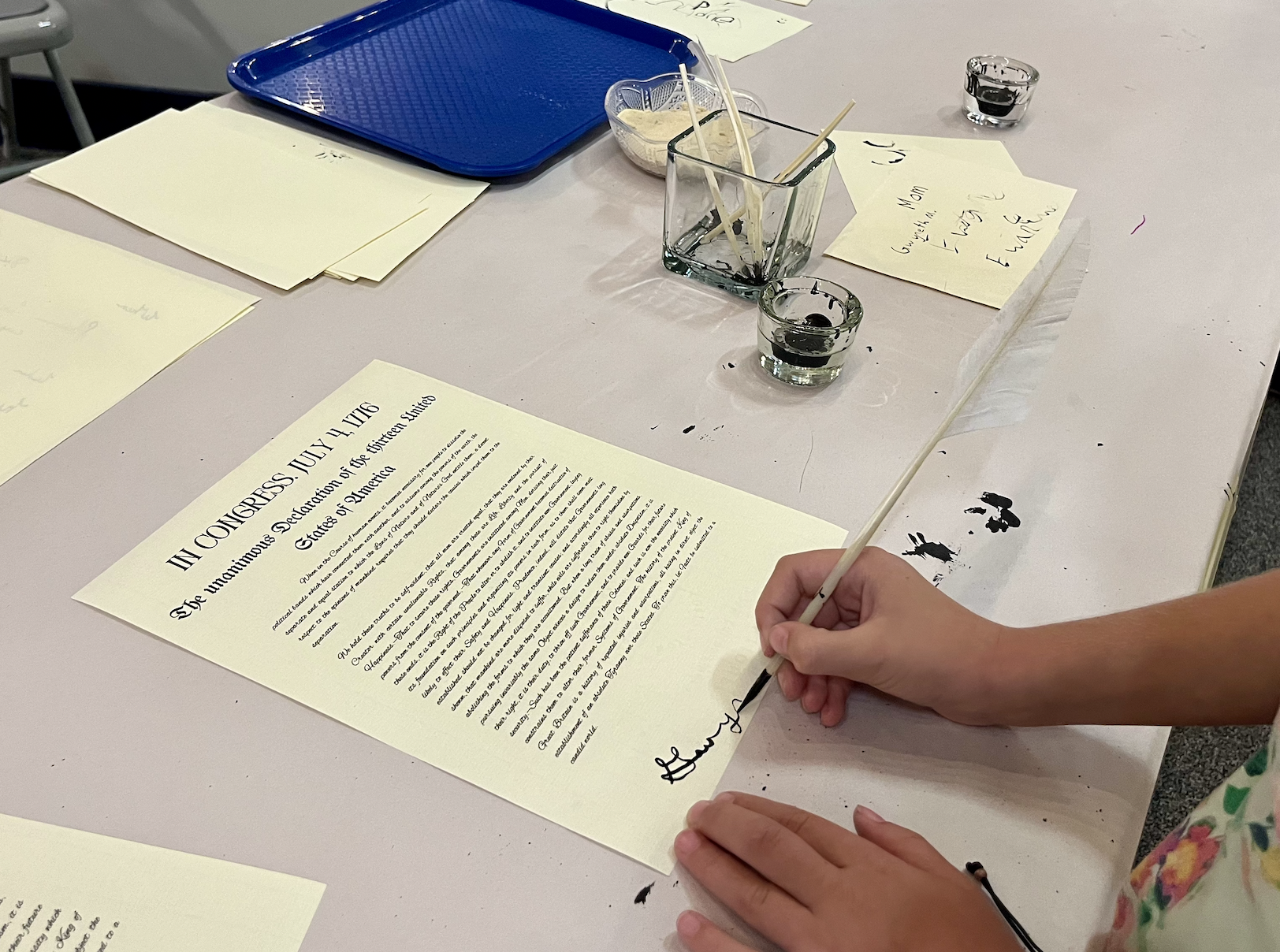
When we visited the North Carolina Maritime Museum in Southport, NC, we saw how long tail feathers (called "quills") were turned into quill pens by carving the tip to a sharp point. Then, we dipped the sharp end into an ink well and could use it to write. We also learned that when these were popular pens, they usually didn't keep the feathers on them but trimmed them so they looked a bit like modern pens!
We practiced writing with a quill pen and signed our own copy of the Declaration of Independence.
Below are a few videos explaining a little about Independence Day and the history and impact of quill pens on Western typography!
This kid-friendly video gives a a good overview and explanation of some vocabulary related to the United State's Independence Day.
These are the steps that would have been used to create quill pens for Western writing. The video gives some interesting insight into the history!