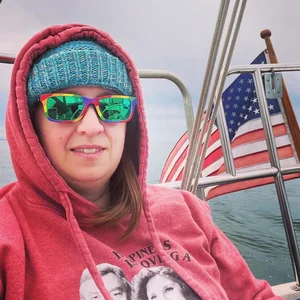
Looping with a History Buff: Visiting America’s Capital by Boat

Sailing into Washington, D.C. feels a little surreal.
You glide past wooded banks and modern bridges, then suddenly the Washington Monument rises in the distance, followed by the Capitol dome. You’re not just cruising into a city—you’re entering a living museum, a place where the story of the United States is told through buildings, memorials, and well-worn streets.
For history lovers, this side trip off the Great Loop is more than a detour. It’s a pilgrimage.
Whether you’re fascinated by early colonial settlements, intrigued by Civil War battles, or stirred by the founding documents of American democracy, the Potomac River delivers.
Starting the Journey: From the Bay to the Capital
We began our upriver adventure by hopping off the Chesapeake near Point Lookout. It’s a historically rich area—once home to a Civil War prison camp and hospital—and as you travel inland, the river’s quiet expanses give little hint of the significance of what lies ahead.
But it’s there, woven into every bend.
Leonardtown: Colonial Roots and Local Legends
Our first taste of local history came at Leonardtown, a charming stop with a deep colonial past. Established in the 1600s as one of Maryland’s original port towns, it still retains the feel of an early settlement, with its brick buildings, quiet streets, and central town square.
Just outside of town, we visited the Moll Dyer Rock, a site steeped in legend. Moll Dyer, accused of witchcraft and driven into the woods during a bitter winter, reportedly died clutching this very stone. It’s become a symbol of injustice—and a reminder of how fear and superstition shaped early communities.
Leonardtown also offered a more sobering connection to the nation’s history of freedom and oppression. We toured the Old Jail Museum, a preserved 19th-century jail that once held everyone from petty criminals to freedom seekers. Exhibits explored the role of the town and the region during slavery and the era of the Underground Railroad. It was a powerful stop—one that helped frame many of the themes we’d continue encountering upriver: justice, liberty, and the struggle to define both.
Mallows Bay and the Ghost Fleet
Farther upriver, we anchored near Mallows Bay, one of the more hauntingly beautiful places we’ve seen. Beneath the waterline rest the remains of over 100 World War I-era wooden steamships, scuttled after the war and slowly reclaimed by nature.
At low tide, the ribs of old hulls rise from the water, now covered in moss and nesting birds. You can dinghy through the maze at high tide or paddle around in a kayak. The ghost fleet is a sobering visual of wartime industry—and what happens when that effort outpaces need.
In its quiet way, Mallows Bay feels like a memorial too: to ambition, to sacrifice, and to the environmental resilience that slowly takes it all back.
Old Town Alexandria: Walking Through the Past
Before reaching the capital, we stopped in Old Town Alexandria, a perfect blend of history and comfort. Cobblestone streets, gas lamps, and 18th-century buildings line the waterfront, and the vibe is walkable, lively, and deeply historic.
We saw the Torpedo Factory Art Center, once a munitions plant and now a vibrant creative hub, and grabbed ice cream from a shop in a building older than most U.S. states. If you have time, Old Alexandria deserves at least a full day—especially for history buffs who like their learning served with a bit of shopping and charm.
Washington, D.C.: Sailing into the Heart of American Democracy
Finally, we made it to Washington, D.C., tying up at the Wharf Marina. From there, the entire National Mall opened up: the Lincoln Memorial, Jefferson Memorial, U.S. Capitol, and dozens of museums packed with artifacts from every era of U.S. history.
For a crew with a passion for history, it was overwhelming—in the best way. The highlights were both expected and surprisingly emotional:
At the National Archives, we stood before the Declaration of Independence and Constitution, a moment that felt solemn and grounding. It’s one thing to read about these documents in a book—and another to see them under glass.
The National Museum of American History offered a layered look at the American experience—from revolutionary struggles to civil rights battles to the changing face of modern life.
The National Museum of African American History and Culture might have been the most moving stop of all. It pulls no punches, and walking its timeline—from slavery through the civil rights era to present day—reminds you just how recent many of these struggles really are.
The war memorials, including those honoring World War II, Korea, and Vietnam, offered quiet, powerful moments of reflection. Each one told not just the story of conflict, but of service, sacrifice, and the cost of freedom.
Together, these museums and memorials didn’t just tell a history of America. They reflected on what kind of country we’ve been, and invite visitors to think about what kind of country we’re becoming.
Reflections from the Helm
There’s something different about visiting a place like D.C. by boat.
Instead of flying in or driving up, you earn the arrival. You trace the same waterways used by Indigenous people, by George Washington’s generation, by Union and Confederate supply lines. You pass places where stories happened—some remembered, others forgotten.
When we stepped off the dock and headed onto the Mall, it wasn’t just another tourist stop. It was a chance to engage with the promise of America—and its contradictions. To see where ideals were declared, where justice was denied, and where progress was demanded.
Visiting by boat gave us time to reflect on the deeper currents: the nation’s imperfect founding, its defining struggles, and the resilience it continues to show. These aren’t just stories about the past—they’re still shaping who we are, and who we want to be.
For our family, cruising the Potomac wasn’t just educational. It was personal. We left feeling more connected, not just to the places, but to the ideas behind them.
Planning Your Own Historic Detour
If you’re cruising the Loop with a history lover aboard, don’t skip the Potomac. A few tips:
Plan your anchoring options. Mallows Bay is a good mid-river stop (you only need an hour or so on anchor here; drop anchor, eat some lunch, then hop in the dinghy and check out the fleet), and the Wharf Marina offers great access to D.C. with a small anchorage nearby.
Pack walking shoes and patience. Much of the best stuff in D.C. requires security lines and long walks, but it’s worth it.
Don’t overlook the small towns. Leonardtown and Old Town Alexandria both felt like time capsules in their own ways.
Give yourself time to reflect. These aren’t just stops. They’re stories—and they’ll stick with you.
We’d Love to Hear From You!
Have you visited D.C. or the Potomac River by boat?
What historic places stood out to you along the way? We’d love to hear your highlights in the comments below.

Want more of what you see here?
If you’re ready for more Great Loop insights, my weekly emails are just what you need!
Each week, you’ll get fresh tips, updates on new blog posts, videos, podcasts, and a chance to catch up on older content you might have missed.
Don’t miss out on practical advice and inspiration for your Loop journey!