Moving Days vs. Rest Days: Why You Need Both

There’s a certain momentum that builds when you’re on the move—miles ticking down, new towns each night, that steady rhythm of cast off, cruise, tie up, repeat. But if you go too many days in a row without pausing, something shifts. You’re not just tired—you’re spent. Even the good stuff starts to feel like too much.
The truth is: rest days are just as important as moving days. And if you’re traveling the Great Loop (or any long cruising route), learning to balance the two might be the key to finishing your trip still smiling.
🧭 The Value of a Moving Day
Moving days are the backbone of your journey. You’re progressing toward your next seasonal checkpoint. You’ve got a plan, a route, and hopefully a beautiful weather window. These days feel productive, purposeful, like you’re accomplishing something.
There’s satisfaction in a good travel day—when you time the tide right, land a sweet anchorage, or dock without drama.
But even good moving days are work. They require focus, patience, and coordination. And while it’s tempting to string a bunch together in the name of progress, you’ll likely find that burnout creeps in quicker than expected.
⚓ The Beauty of a Rest Day
Rest days aren’t lazy—they’re strategic.
They give you space to:
Sleep in.
Fix that weird noise that’s been bugging you.
Take a long walk to nowhere.
Let the kids play or the dog stretch out on land.
Just be on the boat, without prepping to move it.
Some rest days turn into favorite memories: biking into town, discovering a farmers market, meeting a neighbor on the dock who ends up a friend.
And sometimes, rest days are just a quiet day of reading in the cockpit while the world slows down around you. Both are valid. Both are valuable.
🛶 How to Find Your Rhythm
Every crew is different, but here are a few patterns we’ve found helpful and heard echoed from other Loopers:
2-1 rhythm: Two travel days, then one day off.
3-2 rhythm: Three days of movement, two days docked or anchored in one spot.
Week-by-week: Travel Monday to Thursday, rest Friday to Sunday. Or flip that around if you’re working while cruising and have office hours.
Look at your energy levels. Are you dreading the next move? Feel like the fun is blurring into exhaustion? That’s your cue to hit pause.
It doesn’t have to be a full zero-mile day. Sometimes it’s anchoring early and just relaxing the rest of the afternoon. That counts too.
🧰 A Rest Day Doesn’t Mean “Doing Nothing”
If you’re the kind of person who can’t sit still (hi, you’re not alone), here are some ideas for productive rest days:
Boat projects or deep cleans
Laundry & provisioning runs
Route planning for the next leg
Exploring town or visiting museums
Letting the kids burn off steam at a local playground
You’re still moving your adventure forward, just at a different speed.
🛑 What Happens When You Skip the Downtime
Here’s what we’ve seen (and lived) when we try to go too hard for too long:
We get short with each other
Boat chores start to pile up
We’re too tired to enjoy new places
We make small mistakes (and a few big ones)
When we ignore the need to rest, the boat doesn’t run as well, and neither do we.
🌊 Final Thoughts: You’re Not Behind
There’s no prize for finishing fast.
Moving days are important, sure. But rest days? They’re where you recalibrate. Where you fall back in love with the lifestyle. Where your people recover and reconnect.
If you feel guilty taking a day off, remember: you didn’t choose this life to be in a rush.
We’d Love to Hear From You!
Do you have a favorite rhythm that works for your crew? Drop it in the comments—I’d love to hear how you balance movement with downtime!
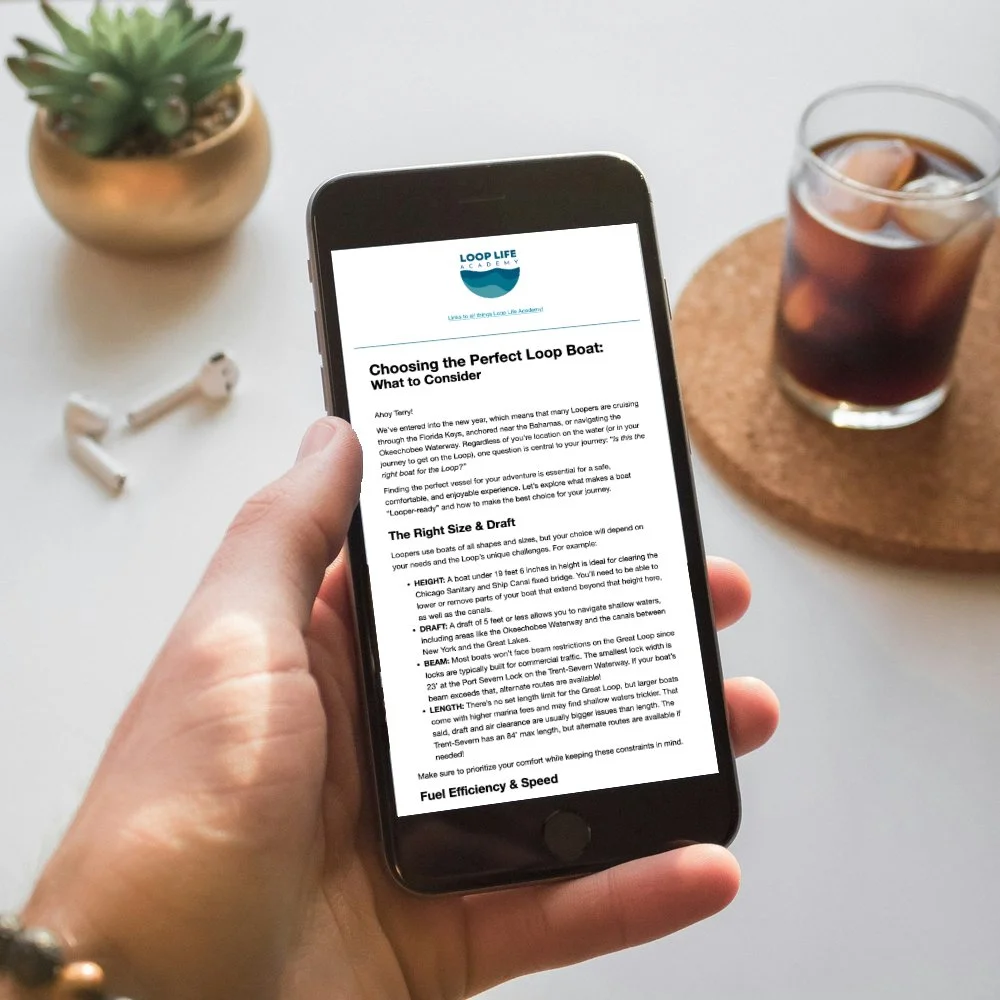
Want more of what you see here?
If you’re ready for more Great Loop insights, my weekly emails are just what you need!
Each week, you’ll get fresh tips, updates on new blog posts, videos, podcasts, and a chance to catch up on older content you might have missed.
Don’t miss out on practical advice and inspiration for your Loop journey!