Navigating Common Waterway Hazards: How to Stay Safe

Boating is one of the greatest ways to explore and experience the world, but it also presents its own challenges. Whether you’re cruising along the Great Loop or just taking a weekend trip, understanding common waterway hazards is crucial for keeping your boat, crew, and fellow boaters safe.
From shifting shoals to sudden storms, let’s explore some of the most frequent dangers on the water and how to navigate them safely.
The information in this blog post is intended for general knowledge and does not replace formal boater safety training or local regulations. Always refer to official boating laws and guidelines for your specific area, and complete a certified boater safety course before operating a vessel. Safe boating practices and awareness of local rules are essential for a smooth and enjoyable experience on the water.
Low Visibility: Boating in Fog, Rain, and Darkness
One of the most unnerving experiences for boaters is losing visibility, whether due to fog, heavy rain, or nighttime cruising. When visibility drops, so does your reaction time, increasing the risk of collisions.
How to Handle It:
Slow Down: Reduce your speed to give yourself more time to react.
Use Radar & AIS: These tools help you detect other vessels and obstacles even when you can’t see them.
Sound Your Horn: A prolonged blast (4-6 seconds) every two minutes signals your presence in fog.
Turn on Navigation Lights: Essential for low-light conditions, ensuring others can see you.
Follow Your Charts & GPS: Stay aware of your surroundings and ensure you’re on a safe course.
Debris & Floating Objects: Hidden Dangers in the Water
Logs, crab pots, and even submerged objects can damage your propeller or hull if you’re not paying attention. These hazards are especially common after storms or in areas with strong currents.
How to Handle It:
Stay Alert: Keep a lookout ahead, and if possible, have another set of eyes watching.
Know Where to Expect Debris: After heavy rain, river inlets and busy commercial waterways often have more floating hazards.
Have a Boat Hook Ready: If you spot something near your boat, use a hook to push it away instead of running over it.
Check for Damage: If you hit something, inspect your engine, propeller, and bilge for signs of trouble.
Shallow Water & Running Aground
One of the quickest ways to ruin a boating day is running aground. Sandbars, shoals, and shifting tides can make even familiar waters unpredictable.
How to Handle It:
Check Your Charts: Both electronic and paper charts will indicate shallow areas.
Monitor Depth Sounders: Know your boat’s draft and stay aware of changes in depth.
Be Cautious in Tidal Areas: Water depth can change drastically with the tide, so plan accordingly.
Know What to Do if You Run Aground: Stop, assess the situation, and try to reverse gently. If stuck, lighten your load or wait for a rising tide.
Strong Currents & Unexpected Weather Changes
Weather on the water can change in an instant, and strong currents or sudden storms can challenge even experienced boaters.
How to Handle It:
Check the Forecast: Always look at multiple weather sources before heading out.
Have a Backup Plan: Know where you can anchor or find shelter if conditions worsen.
Respect the Power of Currents: If entering a high-current area (like an inlet), time your transit with the tide to avoid fighting against strong flows.
Keep Safety Gear Accessible: Life jackets, a ditch bag, and a VHF radio should be within easy reach.
Other Boaters: The Unpredictable Hazard
Not every boater follows the rules—or even knows them! Inexperienced boaters, rental fleets, or large commercial vessels can pose risks on busy waterways.
How to Handle It:
Stay Predictable: Follow the rules of the road and avoid sudden movements.
Keep a Safe Distance: Assume other boaters may not see you or react as expected.
Use Your Horn & Radio: Communicate your intentions, especially when passing or approaching a congested area.
Final Thoughts
Staying safe on the water is about preparation, awareness, and knowing how to handle unexpected challenges. By understanding these common hazards and how to navigate them, you can enjoy a stress-free and fun boating experience.
We’d Love to Hear From You!
Have you ever encountered a tricky situation on the water? How did you handle it? Share your experiences in the comments below!
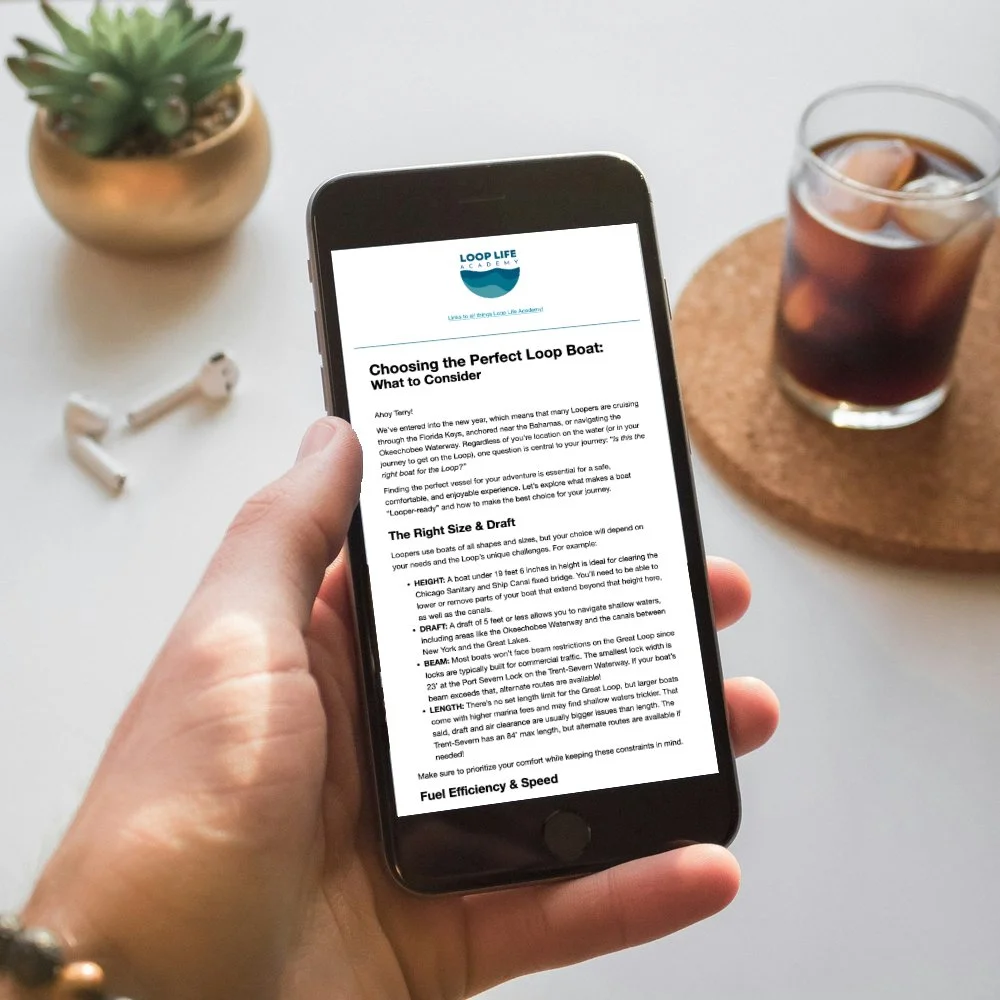
Want more of what you see here?
If you’re ready for more Great Loop insights, my weekly emails are just what you need!
Each week, you’ll get fresh tips, updates on new blog posts, videos, podcasts, and a chance to catch up on older content you might have missed.
Don’t miss out on practical advice and inspiration for your Loop journey!