Preventative Maintenance: How to Avoid Costly Repairs on the Great Loop

One of the best ways to keep your Great Loop adventure stress-free is to stay ahead of maintenance. Boats operate in a demanding environment; without regular checkups, small issues can quickly become major (and expensive) problems.
The good news is that preventative maintenance isn’t as complicated as it sounds. With a simple routine, you can catch potential problems before they escalate, saving time, money, and frustration.
In this post, I’ll break down key maintenance tasks that every Looper should prioritize to keep their boat in top shape.
Check Your Engine Regularly
Your engine is your boat’s lifeline, and keeping it in good condition is essential. A few minutes of routine checks can prevent major engine failures.
Check oil and coolant levels before every trip. Low levels can lead to overheating and severe engine damage.
Inspect belts and hoses for wear. Cracks or fraying mean it’s time for a replacement.
Change oil and filters on schedule. Follow the manufacturer’s guidelines to prevent buildup and wear.
Monitor fuel filters and water separators. Contaminated fuel can cause engine issues—replace filters as needed.
Run the engine at full operating temperature regularly. This helps burn off carbon buildup and keeps things running smoothly.
Keep Your Batteries in Top Condition
A dead battery can quickly turn into a big problem. Proper maintenance helps extend battery life and ensures you always have power when you need it.
Check battery voltage regularly. Use a multimeter to ensure they’re holding a proper charge.
Keep terminals clean and corrosion-free. A little dielectric grease can help prevent buildup.
Inspect battery water levels (if applicable). Low water can shorten the lifespan of lead-acid batteries.
Ensure connections are secure. Loose cables can lead to power failures.
Stay on Top of Your Bilge Pump & Drainage System
Your bilge pump is your first line of defense against flooding, so keeping it in good working order is essential.
Test your bilge pump regularly. Pour a small amount of water into the bilge to ensure it activates properly.
Check float switches for obstructions. Debris can prevent the pump from turning on when needed.
Inspect bilge hoses for cracks or leaks. Damaged hoses can reduce pump efficiency.
Keep your bilge clean. Excess oil, dirt, or debris can clog the system.
Inspect and Maintain Your Propeller & Shaft
A damaged or unbalanced prop can lead to vibration, inefficiency, and even gearbox damage.
Check for dings, bends, or cracks. Even small damage can affect performance.
Ensure the propeller is secure. A loose prop can cause serious drivetrain issues.
Inspect the cutlass bearing. If it’s worn or loose, replace it before problems arise.
Grease the shaft if applicable. Keeping moving parts lubricated extends their lifespan.
Keep an Eye on Plumbing & Freshwater Systems
Leaks, clogged hoses, or contaminated water can quickly become a headache on the water.
Inspect hoses and fittings for leaks. Water damage can be costly, so catch issues early.
Flush the freshwater system periodically. This helps prevent buildup and keeps water fresh.
Check your hot water heater for corrosion. Rusty tanks can fail unexpectedly.
Clean strainers and filters. Blockages can reduce water pressure and cause pump strain.
Don’t Forget About Your Safety Equipment
Preventative maintenance isn’t just about keeping your boat running—it’s also about keeping everyone onboard safe.
Inspect life jackets for wear and damage. Replace any that are torn or have compromised buoyancy.
Check fire extinguishers. Ensure they are properly charged and not expired.
Test navigation and anchor lights. Visibility is crucial, especially at night or in fog.
Examine dock lines and fenders. Worn lines can snap, leaving your boat vulnerable.
Make Preventative Maintenance a Habit
A little time spent on regular maintenance can save you from expensive repairs and unexpected setbacks. Instead of waiting for something to break, stay proactive—your wallet (and your sanity) will thank you.
The best way to stay on top of maintenance is to create a simple checklist and stick to a routine. Whether it’s daily, weekly, or monthly, small habits can make a big difference in keeping your boat in top condition for the entire Loop.
We’d Love to Hear From You!
What’s one maintenance task you never skip?
Share your best preventative maintenance tips in the comments—I’d love to hear what works for you!
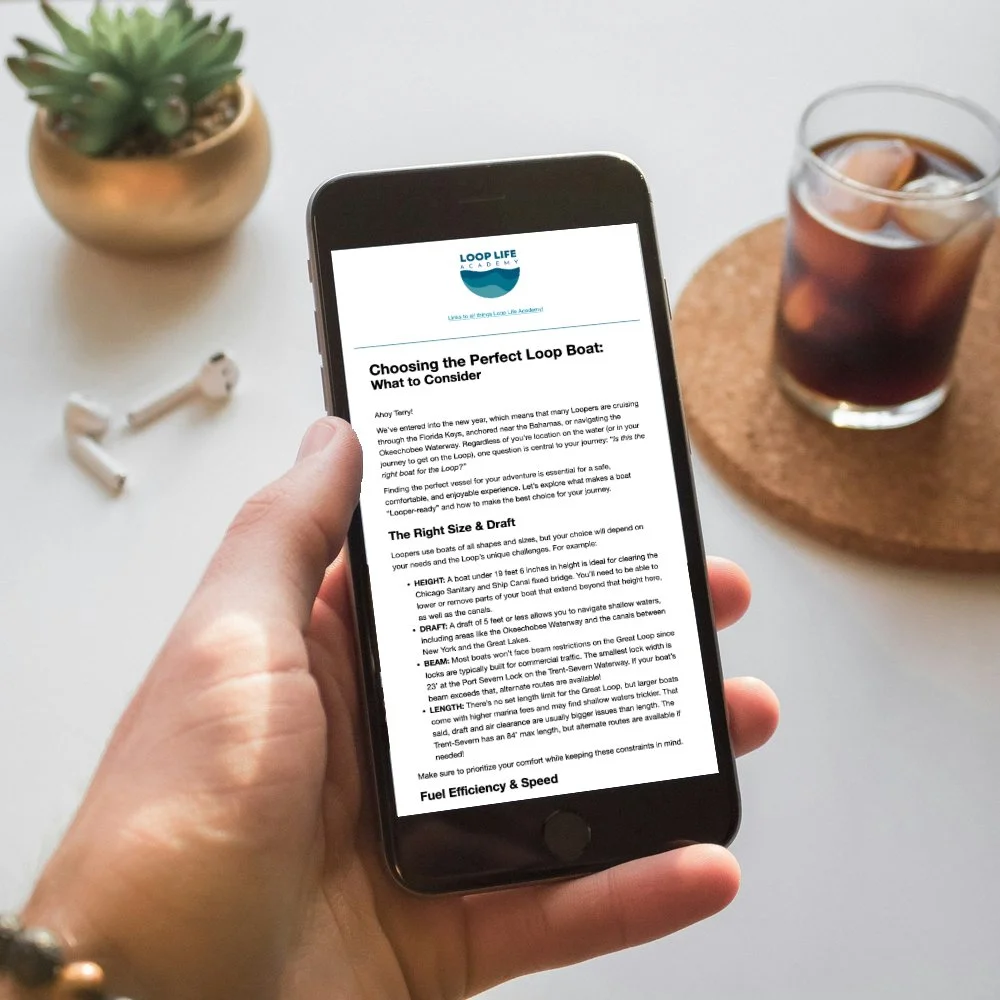
Want more of what you see here?
If you’re ready for more Great Loop insights, my weekly emails are just what you need!
Each week, you’ll get fresh tips, updates on new blog posts, videos, podcasts, and a chance to catch up on older content you might have missed.
Don’t miss out on practical advice and inspiration for your Loop journey!