Weather Wisdom for Cruisers: Reading the Forecast & Staying Flexible

When you’re cruising the Great Loop — or really, cruising anywhere — you quickly learn that the weather rules the schedule. But understanding the forecast isn’t just about wind speed and rain percentages. It’s about knowing how to read the signs, trust your gut, and have a backup plan (or two) in your pocket.
This is especially important in remote or open areas like Georgian Bay, the Great Lakes, or the Florida Gulf Coast, where changing conditions can mean long stretches without a good bailout option.
Here’s how to stay weather-wise and plan smart:
🌤️ 1. Don’t Just Look at One Forecast — Compare
It’s easy to rely on your favorite app, but not all forecasts are created equal. I recommend checking at least 2–3 sources, especially when you’re heading into open water or less-protected areas.
Some tools to try:
Windy – great for wind patterns and swell
NOAA Marine Forecasts (or Canada’s Marine Weather if north of the border)
PredictWind – excellent for passage planning
Buoyweather – helpful in open water zones
WindFinder – quick visual overview
Look for agreement — and pay attention when they don’t agree.
🧠 2. Look Beyond Today’s Forecast
Too many cruisers just check “tomorrow” and go. But the pros look at the full 3–5 day forecast to understand what’s building. If a front is coming, you want to know whether today is the calm before the storm — or just a decent weather window in a stable stretch.
Also look at:
Wave height & period – not just wind
Pressure systems – rising/falling can give clues
Rain + wind combos – a sudden downpour can kill visibility
🗺️ 3. Plan for Where You’re Going — Not Just Where You Are
A lot can change in 30 miles. Georgian Bay, for example, can be calm near shore but blow up quickly in the open. Same goes for Lake Michigan or Albemarle Sound. Always check weather conditions for both your departure and destination, and know how exposed your route will be.
⚓ 4. Keep a Few Bailouts on the Map
This is the flexible planning part: always have a “Plan B” anchorage or marina halfway through your planned leg. Even if you don’t use it, you’ll be glad to have it if conditions change or the crew’s just not feeling it.
Apps like AquaMap, Navionics, and Dockwa make it easy to scout out options and drop pins for backup spots.
🧭 5. Your Boat (and Crew) Matter More Than the Wind Speed
Some days 15 knots is no big deal. Other days, it’s too much. The difference comes down to your boat, your route, and your comfort level. Build experience slowly, listen to your instincts, and don’t be afraid to stay put if something feels off.
A flexible mindset will always serve you better than a rigid schedule.
⛵ Want to Cruise More Confidently?
If you’re working from the boat or managing long-distance logistics, check out my book Remote Work Afloat. It’s packed with tips on managing connectivity, setting realistic cruising goals, and staying flexible — even when the forecast throws you curveballs.
We’d Love to Hear From You!
What’s your go-to app or tip for checking the weather before a cruising day? Drop it in the comments — let’s help each other stay safe out there.
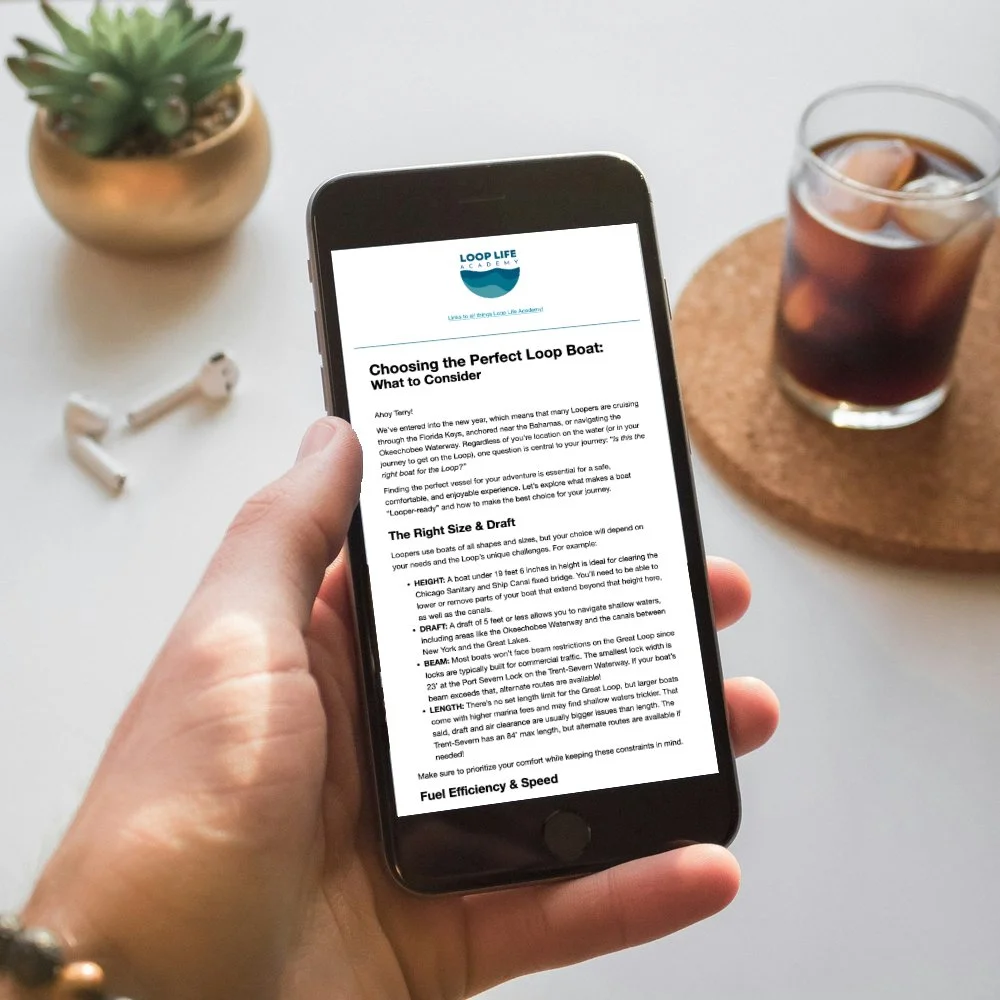
Want more of what you see here?
If you’re ready for more Great Loop insights, my weekly emails are just what you need!
Each week, you’ll get fresh tips, updates on new blog posts, videos, podcasts, and a chance to catch up on older content you might have missed.
Don’t miss out on practical advice and inspiration for your Loop journey!