
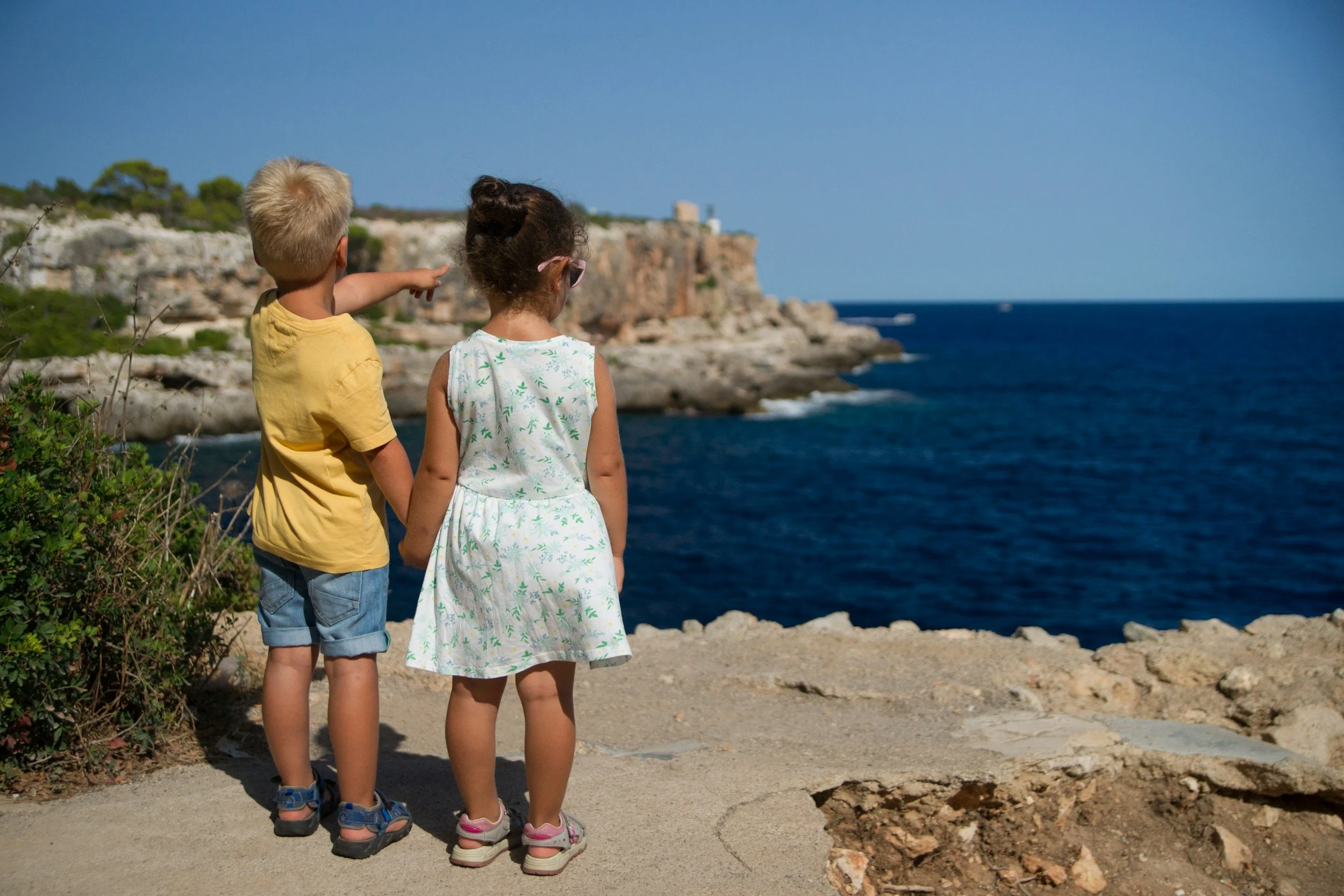
The best education does not happen at a desk, but rather engaged in everyday living – hands-on, exploring, in active relationship with life.
Vince Gowman
Why Homeschool?
Homeschooling provides a lot of benefits, especially for families on the move.

Quality Family Time
Spend more time with your kids during their formative years.
Customized Learning
Tailor your kids' education to challenge but not overwhelm them.
Character Development
Focus on building character, which can be just as important as academic knowledge.
Strong Family Bonds
Build a close-knit family unit through shared experiences.
Student Choice
Give your kids a say in what they want to learn.
Travel Flexibility
Enjoy the freedom to explore the Great Loop as a family without being tied to a traditional school calendar.
Personalized Values
Help instill your family values into your kids.
Self-Learning Skills
Teach your kids the skill of self-directed learning.
Controlled Environment
Protect your kids from negative peer pressure and media influences until they're ready.
Overcoming Common Concerns
For parents worried about lack of structure:
Homeschooling allows flexibility, and structure can be customized to fit your family's needs.
For parents worried about lack of patience:
Patience grows with experience. You'll develop it alongside your kids.
For parents worried about lack of education:
Educational resources are abundant. Local homeschool groups, libraries, curricula, and online resources can provide support.
Learning How to Homeschool
-
Exploring Homeschool Options for Families on the Great Loop
Embarking on America's Great Loop offers families a unique opportunity to bond, explore, and learn together.
Homeschooling on the Loop can be a great way to mix education with your travels, making the journey both an adventure and a learning experience.
This blog post gives an overview of some of the most prominent homeschool methods and a brief list of resources for each.
-

Homeschooling for Absolute Beginners
This book by Lorilee Lippincott is a great way to learn about the benefits and numerous methods of homeschooling.
While our post about homeschool options covers a brief summary of a few of the methods available, this book provides a deeper dive and thorough overview.
Check it out from your local library or grab it from your favorite bookseller!
-

The Brave Learner
Living on the Loop can take a lot of energy, especially for parents. When those tired parents also need to homeschool their kids, it can seem impossible to bring up enough energy to make learning fun and interesting.
In this book, Julie Bogart uses decades of experience to show parents how to make education exciting for their kids, whether they're in elementary or high school.
Bogart provides honest and practical content, explaining how to incorporate learning into everyday life. Her writing style is relatable and faith-neutral, making the book easy to understand and implement.
The Legal Side of Homeschooling
We should also acknowledge that you may need to know some legal requirements depending on your country and/or state.
Here is what I know about homeschooling in the United States, but there may be different requirements for Canada and other countries.
-
The Home School Legal Defense Association (HSLDA) provides valuable information and support for homeschool families.
Visit hslda.org/laws for more details on your state's requirements.
-
Homeschooling has been legal in all fifty states of the US since 1993.
-
Each state has specific requirements for homeschooling. These requirements can be broken down into four categories:
No Notice Required: States where no notification to the state is required.
Low Regulation: States with minimal requirements, such as notifying the state or participating in standardized testing.
Moderate Regulation: States that may require submitting test scores or having evaluations by teachers.
High Regulation: States with more stringent requirements, including detailed record-keeping and curriculum approval.
Homeschool Methods
Below are some popular homeschooling methods, each with unique approaches and benefits.
Many families don’t limit themselves to only one method but choose to mix and match ideas for different topics and subjects, depending on what works for them at that stage of life.
Our boatschool aboard SV Fika often uses a mix of Unit Studies and Traditional Methods while traveling along the Loop.
-
Traditional Method
Overview:
School-at-home approach using textbooks or computer-based learningBest For:
Parents seeking an accredited curriculum. -
Unit Study
Overview:
Integrates several subjects around a central theme or topic.Best For:
Families who enjoy thematic and hands-on learning. -
Charlotte Mason
Overview:
Short lessons using high-quality literature instead of textbooks.Best For:
Focus on narration and learning through literature. -
Montessori
Overview:
Child-led learning with an emphasis on independence.Best For:
Respecting children's natural development and interests. -
Self-Learning
Overview:
Students choose what they want to study, with parents supporting them.Best For:
Encouraging independence and self-motivation in learning. -
Unschooling
Overview:
Child-led learning with no set curriculum.Best For:
Families who believe in learning through life experiences. -
Waldorf Education
Overview:
Focuses on developmental stages and integrating arts into learning.Best For:
Holistic education emphasizing imagination and creativity. -
Classical Method
Overview:
Divides learning into three stages: grammar, logic, and rhetoric.Best For:
Teaching children to think and learn for themselves. -
Literature-Based
Overview:
Uses literature to teach various subjects, integrating the classical and Charlotte Mason methods.Best For:
Families who prefer rich literary resources over textbooks.
Encouragement & Inspiration
Every homeschooling family is unique; what works for one family might not work for another. Flexibility and adaptability are critical, especially when living a nomadic lifestyle on the Great Loop.
Embrace the journey, enjoy the time with your kids, and remember that homeschooling is as much about growing together as academics.

-

Voyaging With Kids: A Guide to Family Life Afloat
Moving your kids onto a boat, even for a year, is an impactful adventure. This book covers a range of topics, including handling naysayers, keeping your kids healthy and safe, choosing the right boat, and more.
A combination of experiences from three authors who have each sailed thousands of miles with kids on board gives a factual and balanced view of the reality of boat life as a family.
-

Leaving the Safe Harbor: The Risks and Rewards of Raising a Family on a Boat
As this family journeys from suburban Atlanta to distant islands, they face challenges, build character, and find spiritual growth. This demonstrates that any dream can become a reality with love, perseverance, and hard work.
This memoir explores the trade-offs of prioritizing relationships and experiences over material things, illustrating how adventure and hardship can lead to profound personal and familial transformation.
-

At Home in the World: Reflections on Belonging While Wandering the Globe
In At Home in the World, Tsh Oxenreider chronicles her family’s nine-month journey across the globe, exploring diverse cultures and grappling with the concept of home.
As they travel from China to New Zealand and beyond, Tsh discovers what it truly means to feel at home while embracing adventure.
This candid and thought-provoking account demonstrates how one can combine a love for travel with a love for home.
Blog Posts Featuring Homeschool Topics…


As an Amazon Associate, I earn from qualifying purchases.

From deep-dish pizza to ethnic neighborhoods bursting with flavor, Chicago is a foodie’s dream—and Loopers can taste it all without straying far from the dock.