How to Play: Going to Boston

A Sailor’s Dice Game That’s Fun for the Whole Family
We learned a new game at the Cumberland Island National Seashore Museum in St. Mary’s, Georgia, and it’s quickly become a favorite on our boat. It’s called Going to Boston, a 19th-century dice game once played by sailors aboard the USS Constitution. It’s simple, fast, and surprisingly fun—and yes, it sneaks in a little math practice, too!
Whether you’re out on the water, tied up at a dock, or just looking for a low-prep activity to break up the day, this one’s easy to learn and quick to play.
Looking for more game rules that you can try? See all of our blog posts in the Game Rules category.
🎲 Game Information
Game Objective
Win the most rounds by scoring the highest sum using three dice per turn.
Number of Players
3 or more
Playing Time
5–15 minutes (or longer, depending on how many rounds you choose)
Supplies
3 dice
Pencil and paper to keep score (optional)
Dice cup (optional—for easier rolling)
Dice tray (optional—to help keep dice onboard)
Recommended Ages
5 and up (younger kids can play with a little help adding)
📜 Game Rules
Each player rolls one die. The highest number goes first. (Roll again in case of a tie.)
On your turn, roll all three dice.
Keep the highest die and set it aside.
Roll the remaining two dice, and again keep the highest.
Roll the last die.
Add all three dice together—that’s your score for the round.
The highest score wins that round.
After your agreed number of rounds, the player who’s won the most rounds is the overall winner!
It’s simple, quick, and surprisingly competitive. The final roll always adds a little suspense, and players get sneakier and quicker with mental math the more they play.
👧 Great for Kids
This one’s especially great for younger players because it’s:
Simple to learn and remember
Quick to play, even with a group
Non-physical, so kids of all coordination levels can join in
Skills It Builds:
Math & Mental Addition – Kids are adding three numbers per round
Counting & Number Recognition – Perfect for early learners
Taking Turns & Fair Play – Everyone gets a shot, and the order rotates
Focus – Players need to watch the dice closely and keep track of scores
Why Our Kids Love It
Fast Turns – No long waits between plays
Exciting Reveals – The final roll always brings a bit of drama
Easy to Learn – Even our youngest friends can join in
No Cleanup – Just grab three dice and go
It’s become our go-to dice game for restaurants, quiet time in the cockpit, or just passing a rainy afternoon on board. I love that it’s rooted in maritime history, and they love that it feels like a real game, not sneaky “schoolwork.”
🧭 Final Thoughts
Going to Boston is a sailor’s pastime that fits perfectly into cruising life. No batteries, no screens, barely any supplies—and it can be played rain or shine, anchored or underway. Plus, it’s a fun little connection to the sailors of the past who likely laughed and competed over the same rolls, hundreds of miles from shore.
If you’re looking for a new game to add to your family’s rotation aboard, give this one a try. It just might become your new go-to, too.
We’d Love to Hear From You!
What are your biggest questions or concerns about transitioning back to life after the Loop? Have you already completed the journey and have tips to share? Let us know in the comments!
Don’t forget to sign up for our weekly email newsletter for more tips, stories, and updates. You can also follow our adventures on YouTube and listen to our podcast for even more inspiration.
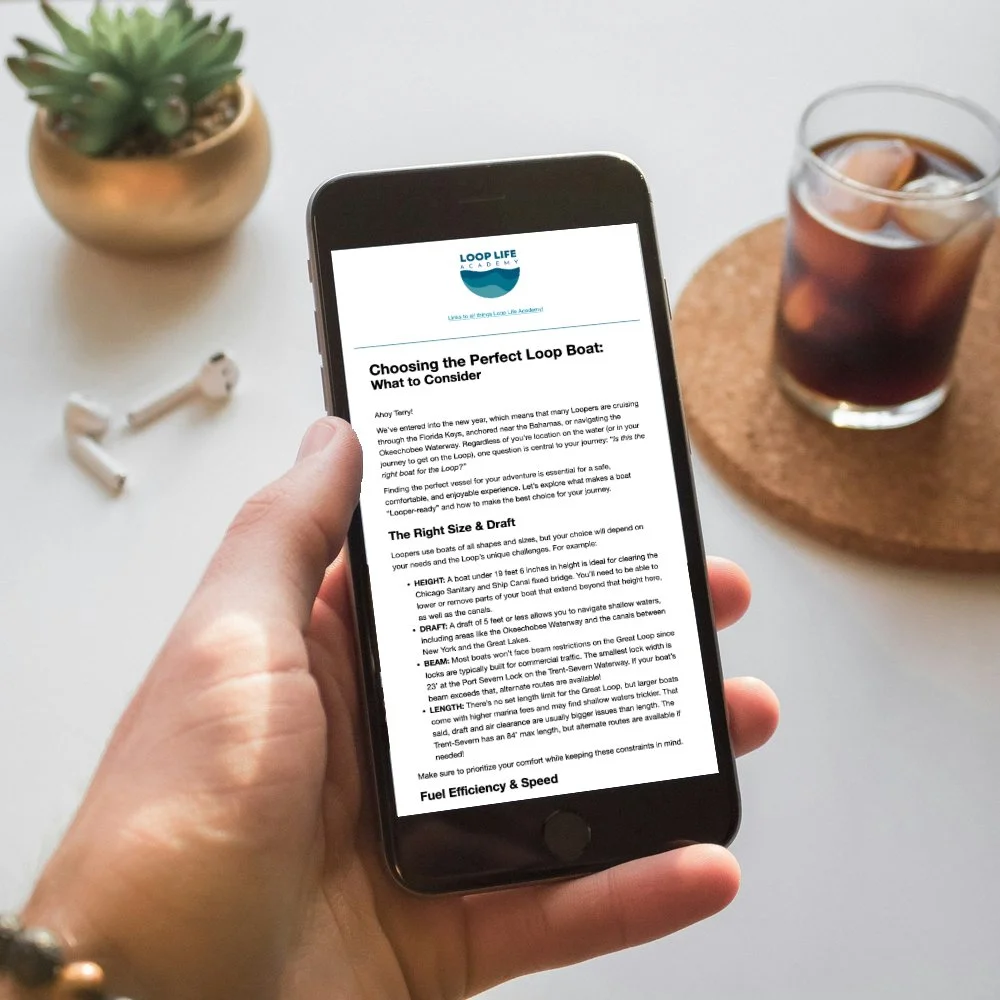
Want more of what you see here?
If you’re ready for more Great Loop insights, my weekly emails are just what you need!
Each week, you’ll get fresh tips, updates on new blog posts, videos, podcasts, and a chance to catch up on older content you might have missed.
Don’t miss out on practical advice and inspiration for your Loop journey!