How to Plan Your Great Loop Route: A Practical Starting Point
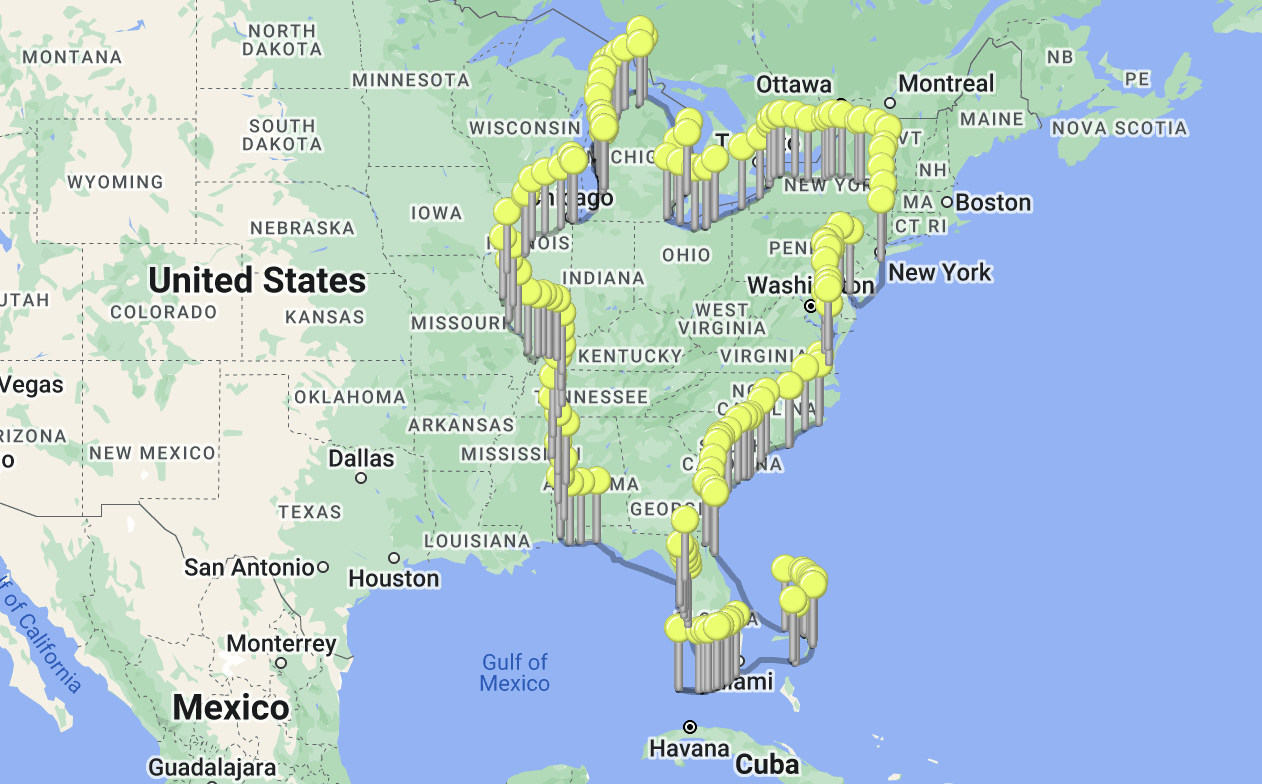
At some point in your Loop research, you're going to pull up a map, trace the general outline of the route with your finger, and think: okay, but how does someone actually plan this?
It's a reasonable question. Six thousand miles across dozens of different waterways, through multiple climate zones, with locks and bridges and tides and seasonal weather windows to account for… it can look, from the outside, like an impossibly complex puzzle.
It's not. But it does require a different kind of planning than most people are used to. Here's how to approach it.
Start with the biggest decision: clockwise or counterclockwise?
Almost every Looper goes around the loop in one direction. The two most common are:
Counterclockwise: heading north along the East Coast first, west along the Erie Canal, then into the Great Lakes and Canada. Once you reach the inland river system, you work your way south and around, eventually rounding Florida and heading back up the ICW to where you started. This is the most popular direction, and for good reason: you're traveling with the flow of the river system rather than against it, and you can follow the seasons around to keep yourself in relatively comfortable conditions: moving south as fall arrives, and back north as winter loosens its grip.
Clockwise: heading south down the East Coast on the ICW, rounding Florida, going up through the Gulf, north on the inland rivers (against the current), across the Great Lakes, and back down the Hudson. Less common, but some Loopers prefer it depending on their starting point, timing, and personal preference.
The honest answer is that both directions can work, and the “right” choice depends on your goals and motivations. Talk to Loopers who've gone both directions. The AGLCA community is a great place to have that conversation — and we have a membership discount on our ambassador page if you're not already a member.
Pick a starting point and know that it's flexible.
The Loop is a loop, which means technically you can start anywhere on it. Most people start close to home, which is a perfectly good reason to choose a starting point.
Common starting regions include the Chesapeake Bay, the Florida coast, the Great Lakes, and the Gulf Coast. Each has its own logic in terms of seasonal timing and what stretch of the route you'll tackle first.
If you have flexibility, let the timing drive the starting point rather than the other way around. Figure out roughly when you want to leave, then figure out where you need to be to make the seasonal windows work in your favor.
Break it down two ways: segments and days.
This is the mental shift that makes the whole thing manageable, and there are two levels at which to do it.
First, think in major segments. Stop looking at 6,000 miles as one number and start thinking about six to eight distinct stretches of the route, each with its own character:
The Atlantic ICW takes you north along the East Coast through sheltered, well-marked waterways, a great place to get your sea legs.
The Erie Canal and Hudson River are the gateway west for counterclockwise Loopers: scenic, lock-heavy, and full of history.
The Great Lakes are the big open-water section of the route. Lake Michigan and Lake Huron, in particular, require respect; they can kick up significant seas quickly. Timing your crossing windows carefully matters here more than almost anywhere else on the route.
The Canadian section via the Trent-Severn Waterway is a fan favorite: scenic, charming, and full of character. You'll need to clear customs and have your paperwork in order.
The inland rivers — the Tennessee-Tombigbee Waterway, the Tennessee River, the Cumberland, the Ohio, the Illinois — are some of the most underestimated stretches of the Loop. Going counterclockwise means you're traveling with the current, which makes a real difference in both speed and fuel. Rivers have their own feel — commercial traffic, lock culture, wide open skies — that's completely different from the ICW. Many Loopers say this section surprised them most.
Florida and the Gulf Coast bring you around the peninsula and back toward the East Coast. The Okeechobee crossing or going around the Keys are the two main route options through Florida.
Second, zoom in further and think in days.
The Loop amounts to roughly 150 individual travel days, averaging about 40 nautical miles each — a very manageable day's run for most boats.
When the whole thing starts to feel overwhelming, this reframe helps: you're not planning 6,000 statute miles. You're planning about 150 passage days on the water, one at a time.
Most of those days look pretty similar: wake up, cast off, cruise 40-ish miles, tie up somewhere new, explore, sleep. Do that 150ish times, and you've done the Loop.
That's it. That's the whole thing.
Think in seasons, not schedules.
The single biggest planning mistake new Loopers make is building a rigid weekly schedule before they leave the dock.
The Loop doesn't reward rigidity. Weather windows close. Mechanical things happen. You fall in love with a town and stay an extra week. A lock goes down for maintenance. A cruising friend convinces you to detour somewhere you hadn't planned.
Instead of a schedule, build a framework of seasonal targets. Where do you need to be by when to avoid the worst weather? For most counterclockwise Loopers, that means being through the Great Lakes before fall weather makes them dangerous, being in the southern river system and Gulf as winter arrives, and timing the ICW run back north to land in spring.
Everything within those seasonal anchors is flexible. Plan your general pace — some people do the Loop in ten months, others take two years — and then let the route fill itself in as you go.
Don't over-plan the details too far in advance.
It's tempting, once you have the segments figured out, to start booking marinas months in advance and building day-by-day itineraries for the entire route.
Resist this.
Not because planning is bad... But overly detailed planning creates a false sense of certainty that the water will quickly disrupt. The best anchorage you find on the whole Loop might be one that nobody told you about until you were 50 miles away.
Plan the seasons. Research the segments. Know your waypoints and your major stops. Leave the daily details for when you're actually there.
A few resources worth having in your planning toolkit.
Beyond the cruising guides we've talked about in an earlier post, a few things that actually help at the route-planning stage:
The Looper’s Companion is the closest thing there is to a Loop-specific planning bible. It covers timing, route options, and logistical considerations in real depth.
ActiveCaptain gives you crowd-sourced intel on anchorages, marinas, and hazards — updated constantly by people who were just there.
Other Loopers. Seriously. The people who have done this recently, on a similar boat, in a similar direction, are worth more than any guide. Find them at AGLCA events, in the online community, and on the docks.
And when you're ready to start tracking your own route decisions, notes, and planning details, our Great Loop Journals have dedicated planning pages built specifically for this kind of thinking.
The route will surprise you. That's the point.
Every Looper I've ever talked to has stories about the stretch they were dreading that became their favorite, and the place they'd been looking forward to for months that was just a quick overnight.
The route plan gets you out there. The water takes it from there.
Start broad. Stay flexible. And trust that 150 travel days on the water (one at a time) will add up to something you couldn't have planned if you'd tried.
We’d Love to Hear From You!
Where are you in your route planning? Are you thinking clockwise or counterclockwise, and what's driving that decision? Drop it in the comments.
Want practical Loop planning guidance delivered every week? Sign up for my weekly emails and stay in the loop.
Want more of what you see here?
If you’re ready for more Great Loop insights, our regular emails are just what you need!
You’ll get fresh tips, updates on new blog posts, videos, podcasts, and a chance to catch up on older content you might have missed.
Don’t miss out on practical advice and inspiration for your Loop journey!